What is capsular contracture?
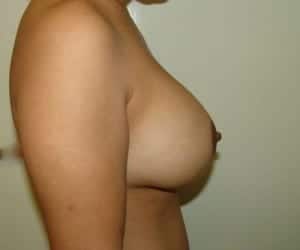
In virtually every woman who has breast augmentation, the body responds to the presence of the implants by forming a capsule of scar tissue around the implant. Like scars on the skin surface, the development of scar tissue is a process that starts within days of surgery and continues for a year or more. Most often, the presence of this scar capsule is not detectable, and the breasts look and feel very natural. Sometimes, however, the capsule contracts around the implant. The breast will then feel firm to hard, and in some cases, the shape of the breast will be distorted. In addition, pain is a symptom of severe capsular contracture.
Capsular contracture symptoms
Capsular contracture is thickening or hardening of the scar tissue that forms around the breast implant. It can make the implant feel firmer. In more advanced cases the shape of the breast will change. The patient may also experience pain, The pain can occur when the breast is touched and it can be constant. The implant usually moves up, therefore, the affected breast will look higher.

When a patient with breast implant starts to get breast pain it usually mean they have grade 4 capsular contracture. The pain is usually constant. Moreover, the pain is worse when wearing a bra or any pressure on the breast.
How common is Capsular Contracture?
No one knows exactly why the capsules surrounding the breast implants contract, nor can they predict who will develop this problem. However, Capsular contracture statistics show that the incidence is about 8%- 12%.
In addition, many studied have shown that placing the implant under the pectorals muscle will reduce the incidence of capsular contracture.
Board Certified Plastic Surgeon



Capsular Contracture causes
One hypothesis is that they occur because of an infectious stimulus. In spite of sterile techniques, bacteria are still present on the skin surface, in the air and within the ducts of the breast tissue. Every plastic surgeon has their own personal surgical ritual they believe lowers the chances of capsular contractures. Some are quite elaborate, and others very simple.
Most surgeons believe that adhering to these common-sense procedures will reduce the incidence of capsular contracture:
- Avoiding incisions that go through the breast tissue (as they do in the peri-areolar incision technique)
- Irrigating the implant and the pocket created to hold it with antibacterial agents
- Giving the patient oral antibiotics around the time of surgery
- Touching the implant as minimally as possible
- Using talc-free gloves during surgery
Although some studies indicate that the rate of early capsular contractures is less when these techniques are used, there are to date no long-term studies to show they actually result in fewer capsular contractures overall. Other factors—such as implant placement above or below the pectoralis muscle, saline or silicone filler, surface texture of the implant, and post-operative massage—seem to affect the rate of capsular contracture. Capsular contractures are not life threatening, but they certainly don’t look or feel “natural.” They can also be painful and distorting.
Capsular Contracture Grades:
Grade 1 : usually the patient is symptomatic
Grade 2: the breast is firmer and can be uncomfortable.
Grade 3: the breast shape changes. Usually the implant will move up causing noticeable difference. The breast will also feel firm.
Grade 4: The breast is not only misshaped but now it is painful to touch.
Breast implant scar removal
In virtually every woman who has breast augmentation, the body responds to the presence of the implants by forming a capsule of scar tissue around the implant. Like scars on the skin surface, the development of scar tissue is a process that starts within days of surgery and continues for a year or more. Most often, the presence of this scar capsule is not detectable, and the breasts look and feel very natural. Sometimes, however, the capsule contracts around the implant. The breast will then feel firm to hard, and in some cases, the shape of the breast will be distorted. In addition, pain is a symptom of severe capsular contracture.